

Early
Deadline
September 30, 2026
Judging
Date
May 24, 2027
Winners
Announced
June 10, 2027
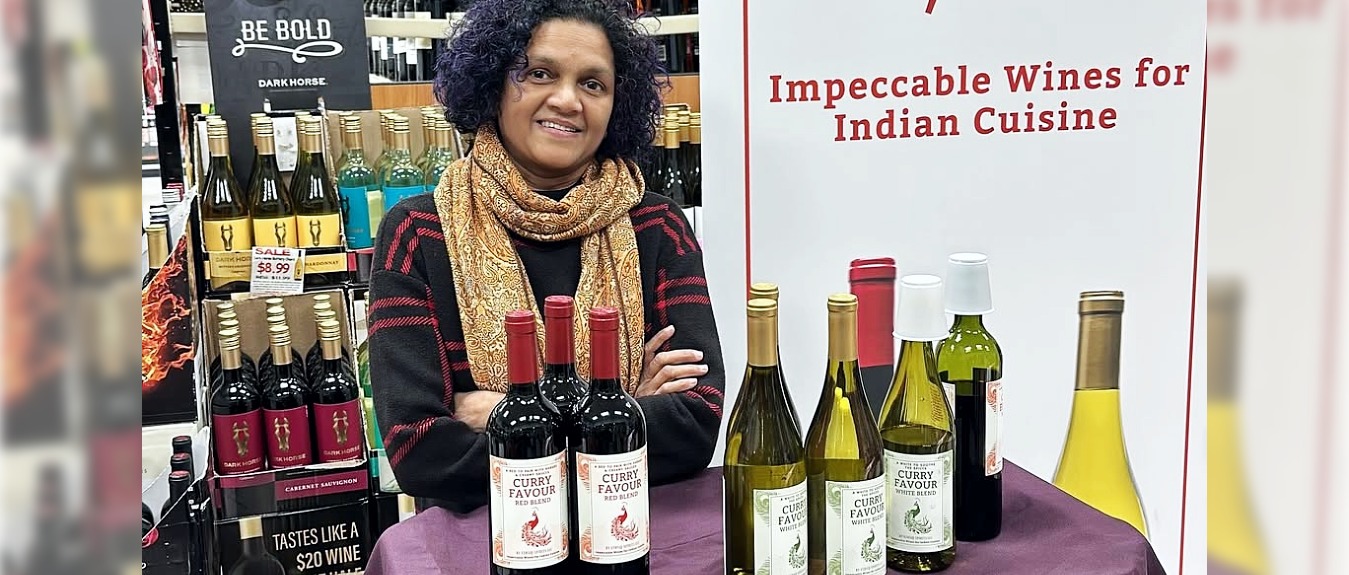
For decades, the language of wine has been grape-centric. Terroir, varietal character, vintage, the conversation has orbited almost exclusively around what grows in vineyards, and the cuisines of the world have been left to fend for themselves. Somewhere in all the technicalities and jargon of the wine industry, the idea that wine was a beverage meant to uplift your food and act as a facilitator of conversation, was lost. And now with wine sales facing serious headwinds, we seem to circled back to this very ideology. That wine is meant to follow food. And when we come to talking about food, the F&B sector is also seeing a revolution in terms of the cuisines the younger generation favours. Asian, Latin-American and Mediterranean cuisines seem to be performing much better as compared to their European counterparts, thanks to the adventurous streak that the Millenial and Gen Z crowd bring to the consumer market.
As we talk about wine pairings and cuisines, a prominent culinary philosophy comes to mind: What grows together goes together. For a while now sommeliers have done their best, reaching for Rieslings to tame a curry, or Grenache to flatter a tandoor, but the fit has always been approximate. A workaround, not a solution.
That is beginning to change.
Across the global wine industry, a quiet but meaningful shift is underway. Winemakers and entrepreneurs are increasingly asking a different question at the start of the process — not "what does this fruit express?" but "what does this food need?" It is a cuisine-first philosophy, and it is producing some of the most exciting bottles to emerge in years.
Fruit-forward wines, long dismissed as the unsophisticated cousin of the grape-based canon, are being reconsidered. When crafted with genuine winemaking expertise — controlled fermentation, deliberate skin contact, careful tannin management — they can deliver the structure, acidity, and body that serious food pairing demands. The prejudice against them has always been cultural rather than technical, a hangover from an era when fine wine meant French wine and everything else was an afterthought.
The more interesting development, however, is not merely what fruit is going into the bottle. It is who is driving the innovation, and why.
A growing number of founders are approaching winemaking from a place of cultural identity, building wines that speak to cuisines and traditions that the existing market has never served well. Indian cuisine is perhaps the most glaring example of this gap. It is one of the world's great culinary traditions, eaten daily by over a billion people and beloved across the diaspora, yet it has never had a wine genuinely engineered to meet it. The spice, the umami depth, the range from delicate street food to slow-cooked dishes, these demand something specific and the conventional wine shelf has never ben able to quite deliver it.
Anitha P. Ramachandran, founder of Ethniq Spirits, has built her brand around precisely this insight. "Ethniq Spirits stands for redefining wine through culture and cuisine," she says, "creating wines that are thoughtfully crafted to complement bold, global flavors, especially Indian cuisine. We represent a shift from generic pairing to intentional, cuisine-first winemaking."
The vehicle for that vision is Curry Favour. And the grape notably plays no part in it.
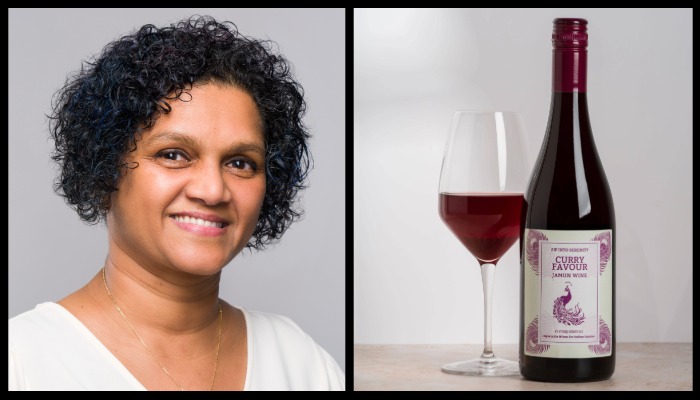
In Frame: Left- Anitha P Ramachandran | Right: Curry Favour Jamun Wine
Curry Favour is made from Jamun, also known as the Java plum, a fruit so embedded in the history of the Indian subcontinent that the ancient Sanskrit name for India itself — Jambudweepam — translates to "the land of the Jamun trees." Botanically, Jamun sits closer to the grape than almost any other fruit in terms of its compositional profile: high tannins, natural resveratrol, and a deep purple pigmentation that produces wines of genuine color and structure. It is not a novelty ingredient dressed up in winemaking language. It is, in many respects, what the grape is, just grown somewhere else, for someone else's table.
The fruit is sourced wild from the forests of the Sahyadri mountain ranges in the Western Ghats, free of pesticides, fertilizers, or chemical intervention. It is then harvested within a window of just fifteen to twenty days before the monsoon arrives. That brevity is not a limitation so much as a mark of authenticity. "The inspiration was simple," Ramachandran explains. "Why not build a wine around a fruit already loved for its complexity? By bringing java plum into wine, we are introducing a culturally authentic, first-of-its-kind product in the U.S."
The winemaking process is where Ethniq Spirits' credibility becomes clear. Ajoy Shaw, the brand's winemaking advisor and a DipWSET-qualified professional with over twenty-five years of global experience — including harvests in Bordeaux, Burgundy, California, and India, and judging appointments in London, Shanghai, and Bordeaux — has helped engineer a vinification approach tailored to Jamun's specific demands. The fruit is hand-sorted, destoned and pulped, then cold macerated for color extraction before fermenting in stainless steel tanks over twelve to fifteen days at low temperatures. The result manages what Jamun's natural astringency might otherwise prevent: a wine with genuine balance, soft tannins, and what the brand describes as a harmonious, approachable finish.
Tasting it, one encounters something genuinely unfamiliar and yet immediately intuitive. The deep rosé color gives way to a nose carrying warm spice (think turmeric or cumin) layered over a gentle, silky softness. The palate is off-dry, light to medium in body, with tannins that flatter rather than dominate. It is a wine built for dishes like samosas, vada pav, tandoori preparations or Indo-Chinese dishes. Dishes that have never had a dedicated companion in the glass.
Ramachandran is candid about one of the challenges the brand faces: the stubborn perception that fruit wines are inherently sweet, simple, or low in craft. "A common misconception is that fruit wines are overly sweet or low quality," she acknowledges. "We address this by positioning Jamun wine as structured like a fine wine, with tannins, acidity, and balance, crafted with world-class winemaking expertise, and designed for serious food pairing." It is a fair rebuttal, and one the liquid backs up in the glass.
For buyers and distributors, the commercial case is as compelling as the cultural one. This is a first-mover category. There is no comparable Jamun wine currently available in the U.S. market. The pairing story is concrete and repeatable, which drives on-premise sales in the growing number of Indian restaurants and South Asian dining establishments looking to build credible wine programs. And for the consumer — the adventurous millennial drinker, the diaspora guest tired of reaching for the nearest Shiraz as a compromise — the product answers a genuine need.
The wider wine industry has spent years talking about diversity and inclusion, largely as a matter of representation in tasting rooms and on judging panels. What Curry Favour represents is something more structural: a reimagining of what wine is for, who it is made for, and where in the world the next great vinous tradition might come from. The answer, it turns out, may have been growing wild in the Western Ghats all along.
Header image sourced from Ethniq Spirits (Instagram).
Discover the top wines recommended for restaurants, wine lists, and by-the-glass programs by leading sommeliers, wine directors, and hospitality buyers. Explore the award-winning wines recognized for quality, value, and real-world restaurant appeal at the 2026 Sommeliers Choice Awards.